What is the role of frequency response in monitors?
"Precision in sound is not merely about volume; it is about the ability to dissect the very fabric of a composition through accurate reproduction."
This guide provides a technical breakdown of professional studio monitor speakers to help engineers and audiophiles select gear for critical listening. You will learn how to evaluate frequency response, driver materials, and placement strategies to ensure accurate sound reproduction.
This analysis focuses on technical specifications and practical setup methods, though it is limited to the mechanical and acoustic properties of the hardware rather than subjective aesthetic preferences.

* Understanding frequency linearity for accurate mixing. * Evaluating driver materials and enclosure design. * Optimizing acoustic positioning in a room. * Identifying the role of specialized analysis in audio.
How to achieve Precision Sound Accuracy?
An engineer sits in a darkened control room, adjusting the height of a heavy woofer to align with their ears. They listen for the subtle decay of a snare hit, searching for any coloration that might mask the true character of the recording.
Achieving precision sound accuracy requires monitors that do not add "flavor" to the audio.
Professional monitors are designed to provide a flat frequency response, meaning they do not artificially boost bass or treble. When a speaker reproduces a signal, it must do so without introducing harmonic distortion that could mislead a producer.
This transparency allows the listener to hear flaws in the mix, such as phase issues or frequency masking, which would be hidden by consumer-grade speakers.
The pursuit of high fidelity in audio often intersects with formal study. The Society for Music Analysis is an academic society, founded in 1992 by Jonathan Dunsby, specializing in music theory and analysis.
While their work focuses on the theoretical side of composition, the same level of scrutiny is applied to the physical reproduction of sound in a professional studio environment.
However, achieving perfect accuracy is difficult in untreated acoustic environments.
What mixing monitor specs should I look for? Pro Studio Monitor Review
At midnight in the quiet booth, the technician runs a hand over the cold metal casing while considering the role of each driver spec. A technician runs a finger along the smooth, matte surface of a high-end cabinet, checking for any vibration-inducing gaps. They look closely at the tweeter's dome, noting whether it is silk, metal, or ceramic, as each material affects high-frequency transients.
Understanding mixing monitor specs is essential for predicting how a speaker will behave under heavy workloads.
Key technical specifications to monitor include the frequency range, which defines the lowest and highest notes the speaker can reproduce. Another critical metric is the sensitivity, measured in decibels, which tells you how much sound is produced relative to the input power.
Drivers must be capable of rapid movement to handle complex transients without losing clarity.
| Feature | Technical Importance | Listener Impact |
|---|---|---|
| Frequency Response | Defines the audible spectrum | Determines bass and treble depth |
| Driver Material | Influences transient response | Affects clarity and coloration |
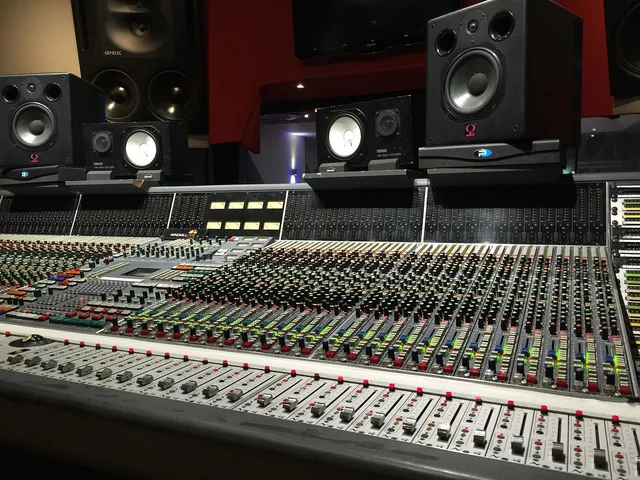
I once spent an afternoon comparing the transient response of a silk dome tweeter against a metal one to see how they handled sharp percussion.
I find that the third step in this evaluation is the most critical.
How can I master studio speaker analysis?
A producer stands in the center of a room, moving a single monitor several inches to the left to see how the standing waves change. They observe the way the sound interacts with the corners of the studio, noting how the bass response shifts with every movement.
Effective studio speaker analysis involves more than just listening; it requires measuring the physical interaction between the gear and the space.
To perform a proper analysis, one must consider the acoustic environment. Even the most expensive gear will sound inaccurate if placed too close to a wall or in a room with untreated reflections.
Professionals use measurement microphones to map the room's response, ensuring the speakers are working with the environment rather than against it.
High-quality audio playback, particularly using lossless formats like FLAC audio playback, ensures that the source signal is as pure as the monitoring system can handle.
If the source is compressed or degraded, the most accurate monitor in the world will simply reproduce that degradation with startling clarity.
This analysis may not apply to small, untreated home listening rooms.
Implementing a Wired Monitoring Setup
An assistant carefully uncoils a thick, shielded XLR cable, threading it through a cable management sleeve to avoid electromagnetic interference. They plug the connector into the back of the monitor, feeling the solid click of a secure connection.
Establishing a wired monitoring setup is the standard for professional environments to ensure signal integrity and minimize latency.
To set up your monitors correctly, follow these steps:
- Position the speakers at ear level, forming an equilateral triangle with your listening position. 2. Connect the monitors to your audio interface using balanced cables to prevent hum and noise. 3. Adjust the acoustic calibration settings on the rear of the speaker to compensate for your room's specific characteristics.
Once the connections are made, perform a final check by playing a known reference track and verifying that the stereo image is centered and the frequency balance feels neutral.
- Select your cables.
- Connect the hardware.
- Test the signal.
Exploring Professional Audio Gear
A studio manager inspects a new shipment of cabinets, noting the density of the wood used for the enclosures. They check the weight of the magnets inside the woofers, knowing that mass plays a role in stability.
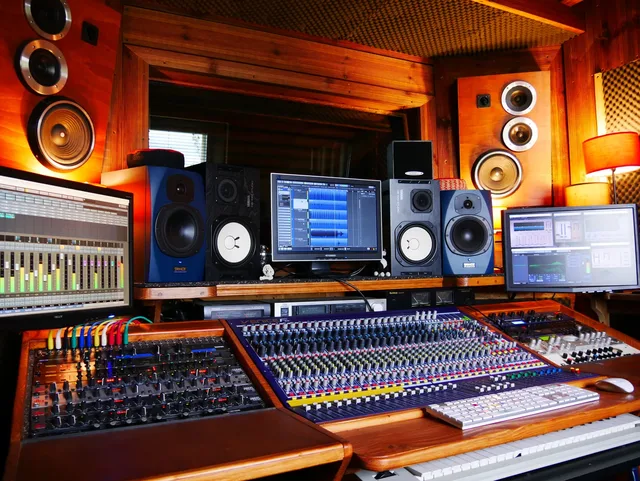
Selecting professional audio gear is a long-term investment in the accuracy of a production workflow.
When choosing gear, prioritize brands that emphasize transparency over "fun" sound. This means looking for monitors that are optimized for the specific needs of mixing, mastering, or tracking.
The goal is to create a predictable environment where a mix made in one studio will translate accurately to other playback systems.
The Society for Music Analysis is a UK-based international organisation dedicated to music theory and analysis. This dedication to structured study mirrors the disciplined approach required when selecting and maintaining high-end audio equipment.
The subject here is Pro Studio Monitor Review.
The same subject is also called High Fidelity Monitors.
Related


Comments 0