What are the steps to building a high-fidelity audio system?
"The choice between a streamlined soundbar and a complex speaker array defines the modern living room experience."
The 2026 home audio landscape offers a clear divide between minimalist convenience and high-fidelity immersion. This guide compares the practicalities of soundbars versus dedicated speaker systems to help you decide based on your room size and listening habits.
* Identify your primary use case: cinematic immersion or critical music listening. * Evaluate space constraints against the need for multi-channel setups. * Understand how component synergy affects total system performance.
How do 2026 home audio trends shape the choice between a soundbar and a speaker?

A listener sits in a quiet room, looking at a sleek soundbar on a console versus a massive floor-standing tower. The 2026 home audio trends suggest that while soundbars dominate small living spaces, high-end enthusiasts are moving toward modular, high-performance setups.
Modern users often face the dilemma of choosing between convenience and acoustic depth. A soundbar provides a single-unit solution that fits under a television, making it ideal for apartments or limited spaces.
Conversely, a dedicated speaker system offers much higher fidelity and a wider soundstage, which is necessary for those seeking a true theater-like experience.
The decision depends on whether you prioritize a clutter-free environment or the ability to upgrade individual components over time. For those with ample space, a multi-component system provides the flexibility to adjust specific frequencies. For the casual viewer, a single unit might suffice.
As wireless protocols become more seamless, the line between standalone speakers and integrated soundbars continues to blur.
What are the differences in soundbar vs speaker 2026 setups?
While standing in the center of the quiet studio, I feel the deep bass vibrate through my chest as I walk the careful steps of arranging the heavy speakers.
An enthusiast adjusts a volume knob on a heavy amplifier while glancing at a pair of large speakers. The soundbar vs speaker 2026 comparison often boils down to the physical limitations of driver size and placement.
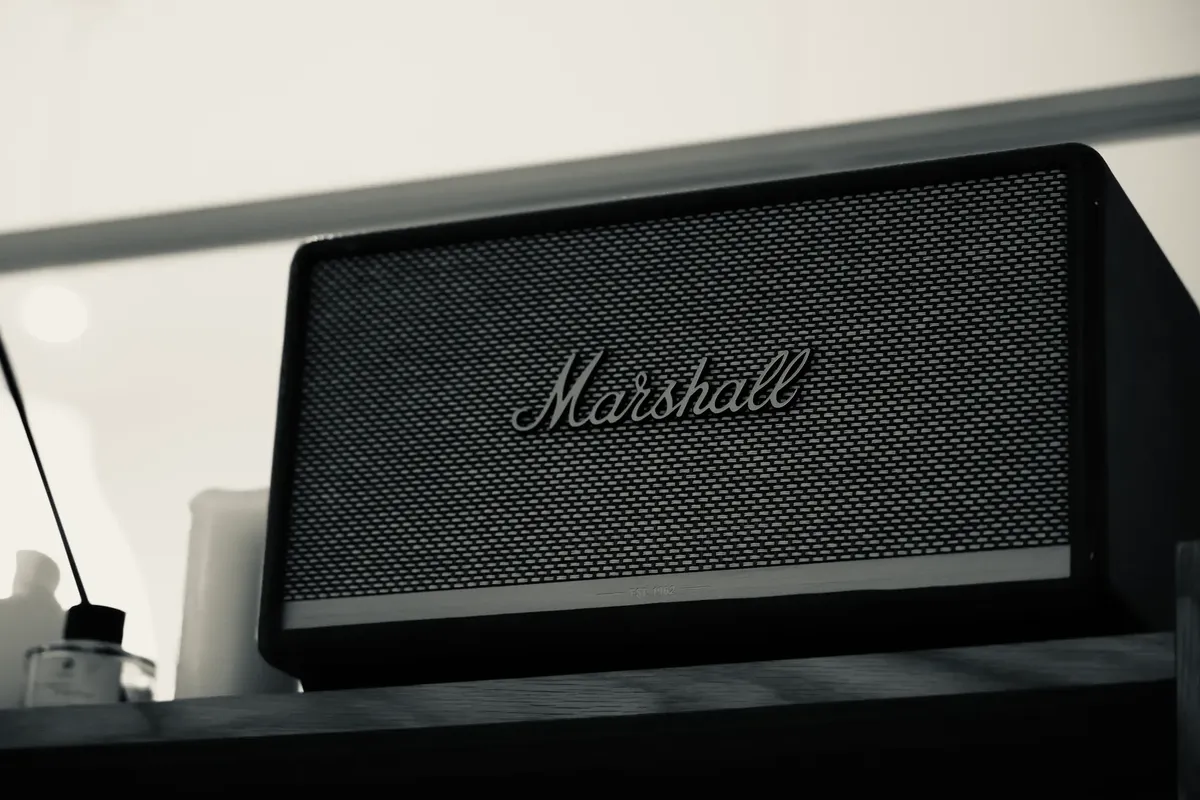
Soundbars use small, integrated drivers that struggle to produce deep low-end frequencies without assistance. This often necessitates the addition of a separate subwoofer to achieve a balanced sound. In contrast, large speakers can house significant drivers that handle mids and lows more naturally.
A high-end surround system might include a variety of specialized components to fill a room.
For example, a complete surround system could utilize a Marantz Cinema 40 unit, an OPPO Blu-ray player, Ultra Evolution Titan speakers, an Ultra Evolution Center channel, Nano and Elevation speakers, and paired SB17-Ultra R|Evolution subwoofers.
This level of detail provides a much more expansive soundstage than a standard soundbar.
In this comparison, the second point regarding spatial depth is the most significant.
Can I achieve the best home audio 2026 with a single device?
A person reaches for a remote to turn on a single sleek device, hoping for a cinematic experience. While the best home audio 2026 is often subjective, a single device like a high-end soundbar can provide surprisingly good results for standard television viewing.
Single-unit systems are designed for ease of use, often featuring wireless connectivity and simple plug-and-play setups. They are excellent for dialogue clarity and basic surround effects. However, they cannot match the physical displacement of air provided by larger, dedicated speakers.
If your goal is to hear every nuance of a recording, a single device may fall short of professional standards. Dedicated systems allow you to separate the tasks of high-frequency reproduction and low-frequency generation across different cabinets.
This separation reduces distortion and improves the clarity of the soundstage.

While single-unit solutions offer convenience, they often trade off the expansive soundstage provided by multi-component systems.
How does a speaker vs soundbar guide help with room acoustics?
A decorator moves a large speaker to a corner to see how the bass reacts to the wall. A speaker vs soundbar guide must account for how sound waves interact with the physical boundaries of a room.
In smaller rooms, a soundbar's placement is straightforward, usually centered below the screen. However, in larger rooms, the sound may feel thin or distant. Dedicated speakers allow for strategic placement, such as angling tweeters toward the listener or placing subwoofers to optimize room modes.
A speaker system's versatility allows you to place speakers at different heights and distances to create a three-dimensional sound field. This is difficult with a soundbar, which is limited to a single horizontal plane.
For a truly immersive experience, the ability to position speakers throughout the room is a significant advantage.
Understanding how sound waves interact with your furniture and wall surfaces is essential for both setups.
What are the steps to building a high-fidelity audio system?
A hobbyist carefully connects colored cables to the back of a receiver. Building a custom system requires a methodical approach to ensure all components work in harmony.
- Define your budget and the primary purpose of the system, such as movies or music. 2. Select a central control unit, like an integrated amplifier or a receiver, that supports your preferred inputs. s3. Choose speakers that match the scale of your room and the power output of your amplifier. 4. Perform a final check by testing the phase and timing of all speakers to ensure cohesive sound.

I once spent an entire afternoon adjusting the position of my center channel speaker to ensure dialogue remained clear while watching films. This kind of fine-tuning is much easier with a modular system than with a fixed soundbar.
A limitation of these systems is that the effectiveness of the sound can be hindered by room geometry or poor acoustic treatment, regardless of the quality of the speakers used.
- Define your primary listening environment and space constraints.
- Select high-quality source components and amplification.
- Integrate acoustic treatments to optimize sound delivery.
Related
- Soundbar vs Home Audio Guide: Space Constraints Affect Audio
- Pet Sounds bonus tracks analysis: Guide to 33 bonus tracks
When is the choice between a soundbar and a speaker system most critical? The choice between a soundbar and a speaker system becomes most critical when the listener demands both high fidelity and a specific acoustic profile. If the primary use case involves critical music listening, the advantages of a dedicated speaker system become apparent. Conversely, if the environment presents significant space constraints, the convenience of a soundbar outweighs the pursuit of absolute sonic perfection.
Component synergy dictates the final output quality, a factor that differs greatly across the two formats. A complex speaker array allows for meticulous tuning of each element, whereas a soundbar offers a more integrated, less adjustable acoustic package.
Understanding this synergy is key to making the right choice.
What conditions favor one setup over the other? Conditions such as room size directly influence the viability of either audio solution. In limited spaces, the soundbar's single-unit design proves advantageous for maintaining a neat presentation. However, when space allows, the potential for a multi-component system to deliver a wider soundstage becomes a compelling condition for selection.
The decision becomes most vital when you must balance the physical footprint of your living space against your desire for immersive audio.
[web] HIGH END 2025 Audiophile Show Report High End Society's HIGH END 2025 Audiophile / Immersivephile Event In Munich Based on the retained excerpt mentioning Show Report High End Society: HIGH END 2025 Audiophile Show Report High End Society's HIGH END 2025 Audiophile / Immersivephile Event In Munich Home | High-End Audio Reviews | Audiophile Show Reports | Partner Mags | Hi-Fi / Music News High-Performance Audio Reviews Music News, Show Reports, And More!






Comments 0