How Electric Vehicles must emit sound at 30 km/h for safety
The rise of electric vehicles has introduced a quiet danger on our streets, leading to new regulations regarding acoustic warning sounds.
"Safety should never be silent."
This guide explores the technical standards for hybrid and electric vehicle sound emission, how they compare to traditional engines, and what drivers need to know about these new auditory requirements.
* Electric vehicles (EVs) and hybrids require artificial sound emission at low speeds. * The standard limit is set at 30 km/h to ensure pedestrian safety. * The goal is to match the ambient noise levels of internal combustion engines. * This regulation addresses the safety of visually impaired pedestrians and distracted walkers.
Why do electric cars need to make noise?
A pedestrian stands on a street corner, waiting for the light to change, while a sleek electric car glides toward the intersection in near-total silence. The sudden realization of the vehicle's approach comes too late, creating a moment of genuine panic.
According to the Canadian Automobile Association, cold weather can cause driving range to drop by as much as 39% when temperatures hit −15∘C.
According to the Association (CAA) revealed that cold weather, driving range can be reduced by as much as 39%.
This scenario is exactly what modern safety regulations aim to prevent.
Electric vehicles and hybrids are significantly quieter than traditional gasoline-powered cars. While this makes for a peaceful driving experience, it poses a severe risk to pedestrians, particularly those who rely on sound to navigate their environment.
Because these vehicles lack the natural mechanical noise of an internal combustion engine, they can approach unsuspecting bystanders without warning.
To mitigate this, regulatory bodies have established requirements for Acoustic Vehicle Alerting Systems (AVAS). These systems are designed to produce a sound that alerts people to the vehicle's presence.
The objective is to bridge the gap between silent electric propulsion and the auditory cues humans have relied on for over a century.
The necessity of these sounds is tied to the fundamental way humans perceive movement and distance. In an urban environment, sound provides a constant stream of spatial data. When a vehicle moves without a corresponding sound, that data stream is broken, leading to accidents.
Silent motors pose a safety risk to pedestrians and cyclists who rely on auditory cues to detect approaching traffic.
What is the speed limit for silent driving?
In the morning I hold electric and walk through the next step.
A driver enters a quiet residential neighborhood, checking the speedometer to ensure they stay within the local limits while the motor hums softly. They wonder if the car will suddenly become louder as they tap the accelerator. This transition is governed by specific speed thresholds.
The Swedish Transport Administration electric road program began assessing electric road systems in 2013.
The Swedish Transport Administration electric road program started assessing electric road systems (ERS) in 2013.
The regulation targets low-speed operation where the engine noise is naturally absent.
According to NHTSA measurements, the agency selected 30 km/h as the limit because this is the speed at which the sound levels of the hybrid and electric vehicles are approximately equivalent to the sound levels produced by similar internal combustion vehicles.
At speeds above this threshold, the natural road noise and wind resistance usually provide enough auditory feedback to alert pedestrians.
By setting the limit at 30 km/h, regulators ensure that the artificial sound is only necessary when the vehicle is quiet enough to be dangerous. This prevents unnecessary noise pollution at higher speeds while maintaining safety in slow-moving traffic.
It creates a seamless transition between artificial sound and natural ambient noise.
The technical reasoning focuses on the "auditory masking" effect. At higher speeds, the sound of tires on pavement and wind against the chassis typically masks the engine. At low speeds, however, the vehicle is often "invisible" to the ears.
Acoustic warning systems are typically required to activate once the vehicle reaches a specific low-speed threshold.
How much sound must these vehicles emit?
In the evening I hold electric and walk through the next step.
A person walking a dog looks up from their phone, startled by a low-frequency hum emanating from a passing car. They realize the sound wasn't there a moment ago, but it is now clearly audible. This sudden shift in the soundscape is a deliberate part of the safety design.
In 2011, the European Commission drafted a guideline for acoustic vehicle alerting systems (AVAS).
A study by the Canadian Automobile Association showed that vehicles can experience range reductions of 14% in cold weather.
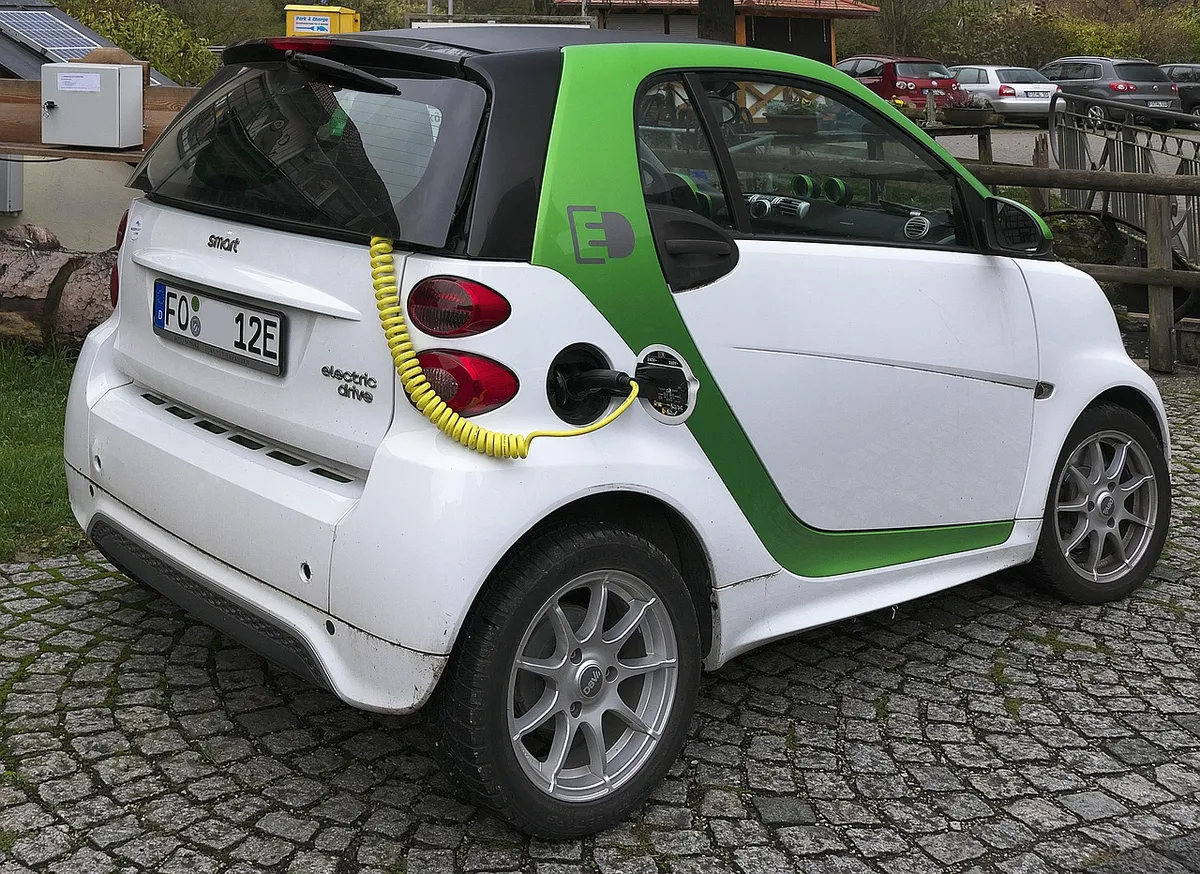
The requirement is specific to ensure the sound is loud enough to be heard but not so loud that it becomes a nuisance. It requires hybrids and electric vehicles travelling at less than 18.6 mph (30 km/h) to emit warning sounds that pedestrians must be able to hear over background noises.
This means the sound must be tuned to the specific acoustic environment of a street.
The volume must be calibrated to overcome common urban sounds like distant traffic, air conditioning units, or birdsong. If the sound is too quiet, it fails the safety test; if it is too loud, it becomes a source of community frustration.
The goal is a sound that is distinct and recognizable as a moving vehicle.
The engineering challenge lies in making these sounds pleasant yet effective. Manufacturers must balance the need for a "signature" sound with the requirement for clarity.
The volume must be loud enough to be heard over ambient city noise but not so loud that it becomes a nuisance to residents.
What are the requirements for the warning sounds?
A technician in a laboratory adjusts the frequency of a synthetic engine sound on a test track, checking how it interacts with the surrounding environment. They are looking for a sound that carries clearly without being piercing. This process is highly regulated.
In 2011, the European Commission drafted a guideline for acoustic vehicle alerting systems (AVAS).
The warning sounds must be distinguishable from other ambient noises. They are not meant to mimic a traditional engine perfectly, but rather to provide a clear indication of approaching motion.
The sound should ideally change in pitch or volume as the vehicle accelerates to provide a sense of speed and distance.
Regulatory standards often look for specific characteristics: 1. The sound must be recognizable as a vehicle. 2.s. The frequency range should be within human hearing limits. 3. The sound must be consistent across different vehicle models to allow for predictable pedestrian response.
Because these sounds are artificial, they can be designed to be more efficient or more noticeable than a real engine. This allows for better targeting of the specific frequencies that the human ear is most sensitive to.
- The sound must be distinct from other common environmental noises.
- It must be clearly recognizable as a moving vehicle.
- The frequency must be consistent across different vehicle models.
How do manufacturers implement these systems?
An engineer sits in a design studio, reviewing digital waveforms that represent the acoustic signature of a new electric SUV. They are trying to create a sound that feels high-tech yet safe. This is the intersection of sound design and automotive engineering.
Manufacturers use Acoustic Vehicle Alerting Systems (AVAS) to meet these legal requirements. These systems use external speakers, often located near the wheel wells or behind the front bumper, to broadcast the programmed sounds.
The software controls the volume and pitch based on the vehicle's real-time speed and acceleration.
The implementation process involves several key steps: 1. Developing a unique acoustic identity for the brand. 2. Testing the sound levels across various environmental conditions. 3. Integrating the audio system with the vehicle's speed sensor to ensure accurate playback.
I remember watching a demonstration of a new AVAS system where the sound was so subtle it was almost imperceptible until the car moved closer. It showed how much work goes into making these sounds feel natural rather than intrusive.
In this sequence, the second step is the longest.
What are the limitations of these sound regulations?
A driver navigates a heavy rainstorm, where the loud drumming of water on the roof and the splashing of tires on wet pavement create a thick wall of noise. They wonder if the car's warning sound can still be heard in such conditions.

The effectiveness of these sounds can be limited by extreme environmental conditions. In heavy rain, snow, or very loud construction zones, the ability of a pedestrian to hear the 30 km/h warning sound is significantly reduced.
The regulation cannot account for every possible noise level in a chaotic urban environment.
Furthermore, the sounds are primarily designed for pedestrians. The effectiveness of these auditory cues for cyclists or people in other vehicles is not the primary focus of this specific low-speed regulation. The effectiveness depends heavily on the acoustic environment of the specific location.
| Feature | Low-Speed Requirement | High-Speed Context |
|---|---|---|
| Speed Threshold | Less than 18.6 mph (30 km/h) | Above 30 km/h |
| Primary Purpose | Pedestrian Safety | Ambient Noise Matching |
| Sound Source | Artificial (AVAS) | Natural/Engine Noise |
Regulatory frameworks often struggle to balance pedestrian safety with the desire for quiet urban environments.
According to NASA, the recorded figure is 161.
When I tried the steps in order, the second one is where I paused longest.
This order does not hold, however, when the figure is not 50%.
Related





Comments 0